
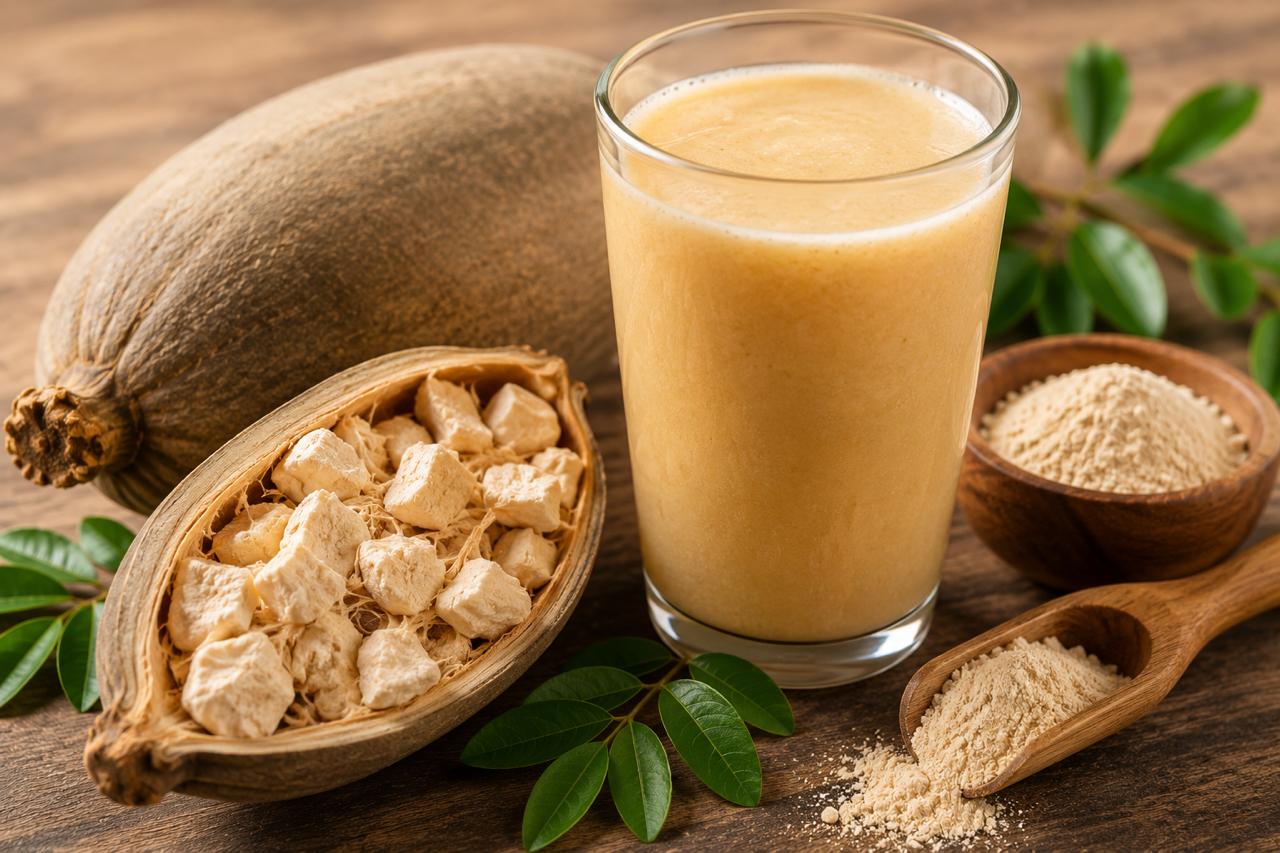
Baobab is one of Africa’s most treasured fruits, often called the “Tree of Life.” For centuries, it has been enjoyed across many African countries for its naturally tangy flavor, impressive nutritional value, and versatility in traditional cooking and beverages.
Whether blended into a refreshing homemade juice, added to smoothies, or mixed into porridges and desserts, baobab is a unique ingredient that deserves a place in every kitchen.
At Dedior Cooking, we love sharing authentic African ingredients and traditional recipes that have been passed down through generations.
What Is Baobab?
Baobab is the fruit of the majestic baobab tree, one of Africa’s most iconic trees. Known for its enormous trunk and long lifespan, the baobab tree can live for over a thousand years and thrives in dry climates throughout Africa.
Unlike many fruits, baobab naturally dries while still hanging on the tree. Inside its hard shell are pieces of naturally dried fruit pulp surrounding small seeds. The pulp can be eaten as is or ground into a fine powder.
What Does Baobab Taste Like?
Baobab has a naturally refreshing flavor that is:
Its bright flavor makes it an excellent ingredient for homemade juices, smoothies, and desserts.
Nutritional Benefits of Baobab
Baobab is naturally rich in several nutrients that make it a valuable addition to a balanced diet.
Rich in Vitamin C
Baobab is naturally high in vitamin C, an important nutrient that supports normal body functions and contributes to overall wellness.
Excellent Source of Fiber
Baobab contains dietary fiber, making it a satisfying ingredient for beverages and recipes.
Contains Essential Minerals
Baobab naturally provides minerals such as:
These nutrients play important roles in maintaining normal body functions.
Naturally Rich in Antioxidants
Baobab contains naturally occurring antioxidants that help protect the body’s cells from oxidative stress.
Note: Baobab can be part of a healthy diet but is not intended to diagnose, treat, cure, or prevent any disease.
Traditional Uses of Baobab
Across Africa, baobab has been enjoyed for generations in many different ways.
It is commonly used to make:
Its naturally tangy flavor pairs beautifully with tropical fruits and citrus.
How to Choose Baobab
When purchasing baobab:
How to Store Baobab
Whole baobab fruits can be stored for several months in a cool, dry place.
Once the pulp or powder has been removed:
Tips for Making Baobab Juice
Frequently Asked Questions
Is baobab naturally sweet?
Baobab has a naturally sweet and tangy flavor with pleasant citrus notes.
Can baobab be eaten without cooking?
Yes. The dried pulp can be eaten as is, mixed into beverages, or used in recipes without cooking.
Is baobab only found in Africa?
Baobab trees are native to Africa, although some species also grow in Madagascar and Australia. African baobab is the variety most commonly used for food and beverages.
Can baobab be frozen?
Prepared baobab juice freezes well and can be enjoyed later as a refreshing frozen treat.
Try Our Homemade Baobab Juice Recipe
If you’d like to experience the refreshing taste of baobab, be sure to try our Homemade Baobab Juice Recipe here on Dedior Cooking. Made with simple ingredients and traditional techniques, it’s a delicious drink the whole family will enjoy.
Final Thoughts
Baobab is more than just a fruit—it’s a symbol of African heritage, tradition, and natural goodness. Its refreshing flavor, versatility, and nutritional value have made it a beloved ingredient for generations.
At Dedior Cooking, we’re passionate about sharing authentic African recipes and introducing home cooks around the world to the incredible flavors of African cuisine. Explore our collection of homemade juices, traditional dishes, and cooking tips to discover your next favorite recipe.