
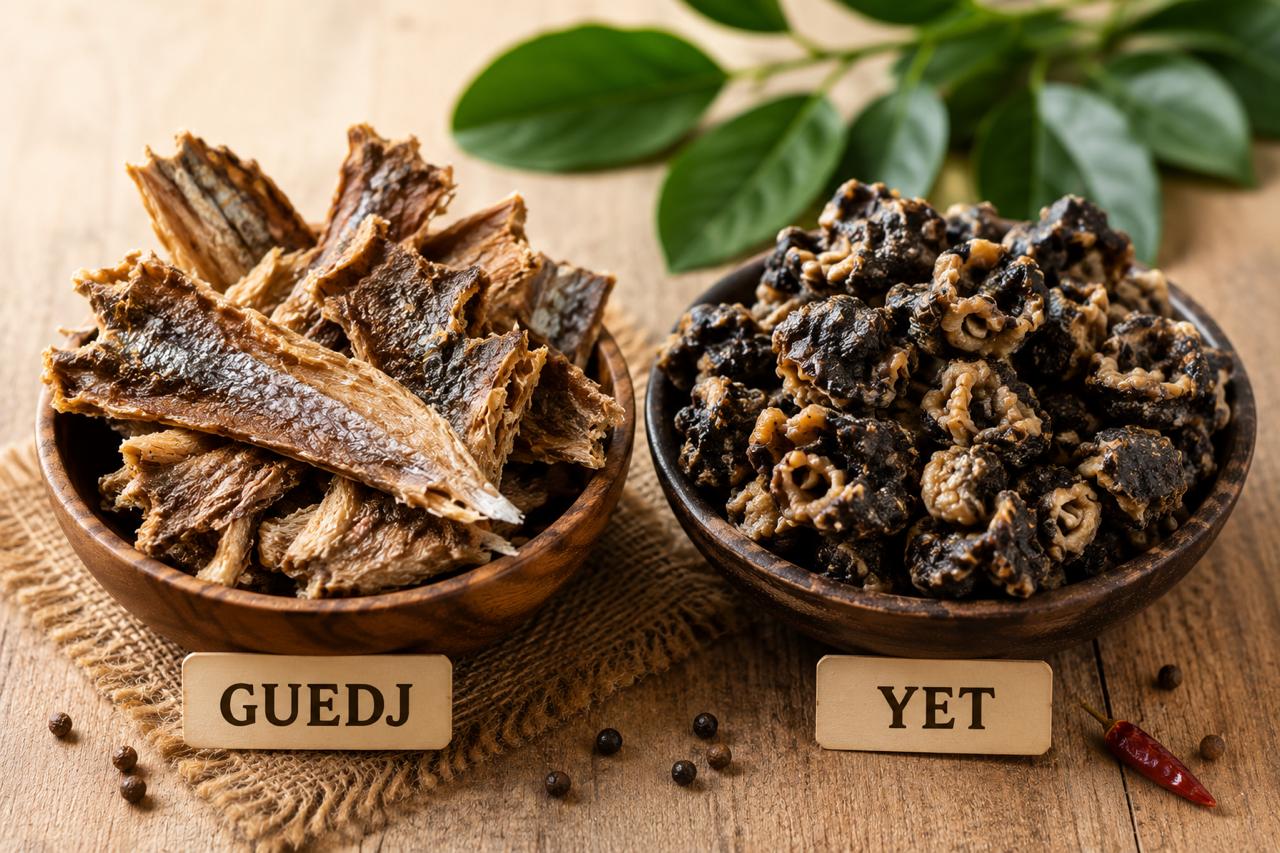
If you’ve ever wondered why traditional Senegalese Jollof Rice (Ceebu Jën or Thiéboudienne) has such a deep, rich, and unforgettable flavor, the answer often lies in two traditional ingredients: guedj and yet.
These fermented seafood ingredients have been used in Senegalese cooking for generations and are considered essential for creating the authentic taste that makes Senegalese rice dishes so distinctive.
At Dedior Cooking, we believe that understanding traditional ingredients is one of the best ways to recreate authentic African recipes at home.
What Is Guedj?
Guedj is fermented and dried fish that has been salted and naturally fermented before drying.
It has a strong aroma but develops an incredibly rich umami flavor when cooked.
In Senegal, guedj is commonly added to:
Although its smell may seem intense at first, it transforms during cooking into a savory depth of flavor that is difficult to replicate with other ingredients.
What Is Yet?
Yet is fermented sea snail (marine snail), another traditional Senegalese ingredient prized for its rich umami taste.
Like guedj, yet has a strong aroma when raw but becomes mild and flavorful once cooked.
It is often combined with guedj to create the signature taste found in many Senegalese dishes.
Why Do They Make Such a Difference?
Both guedj and yet are naturally rich in umami, the savory flavor often described as the “fifth taste.”
When they are gently fried at the beginning of cooking, they release flavorful compounds into the oil. That infused oil becomes the foundation of the dish, adding layers of savory flavor to every grain of rice.
This cooking technique is one of the secrets behind authentic Senegalese Jollof Rice.
How to Use Guedj and Yet
For the best results:
Starting your recipe this way allows the oil to absorb the rich flavors of the fermented seafood before the vegetables and spices are added.
Can I Use Them in Other Recipes?
Absolutely. Guedj and yet can also be used in:
A small amount goes a long way.
Where Can You Find Guedj and Yet?
These traditional ingredients are commonly available in:
They are usually sold dried and should be rinsed before cooking.
Final Thoughts
If you want your homemade Jollof Rice to taste closer to the traditional Senegalese version, don’t overlook the importance of guedj and yet. These time-honored ingredients create a depth of flavor that cannot easily be achieved with seasonings alone.
At Dedior Cooking, we love sharing authentic African cooking techniques that have been passed down through generations. Sometimes, it’s not just the recipe that makes the difference—it’s understanding the ingredients and how to use them.